
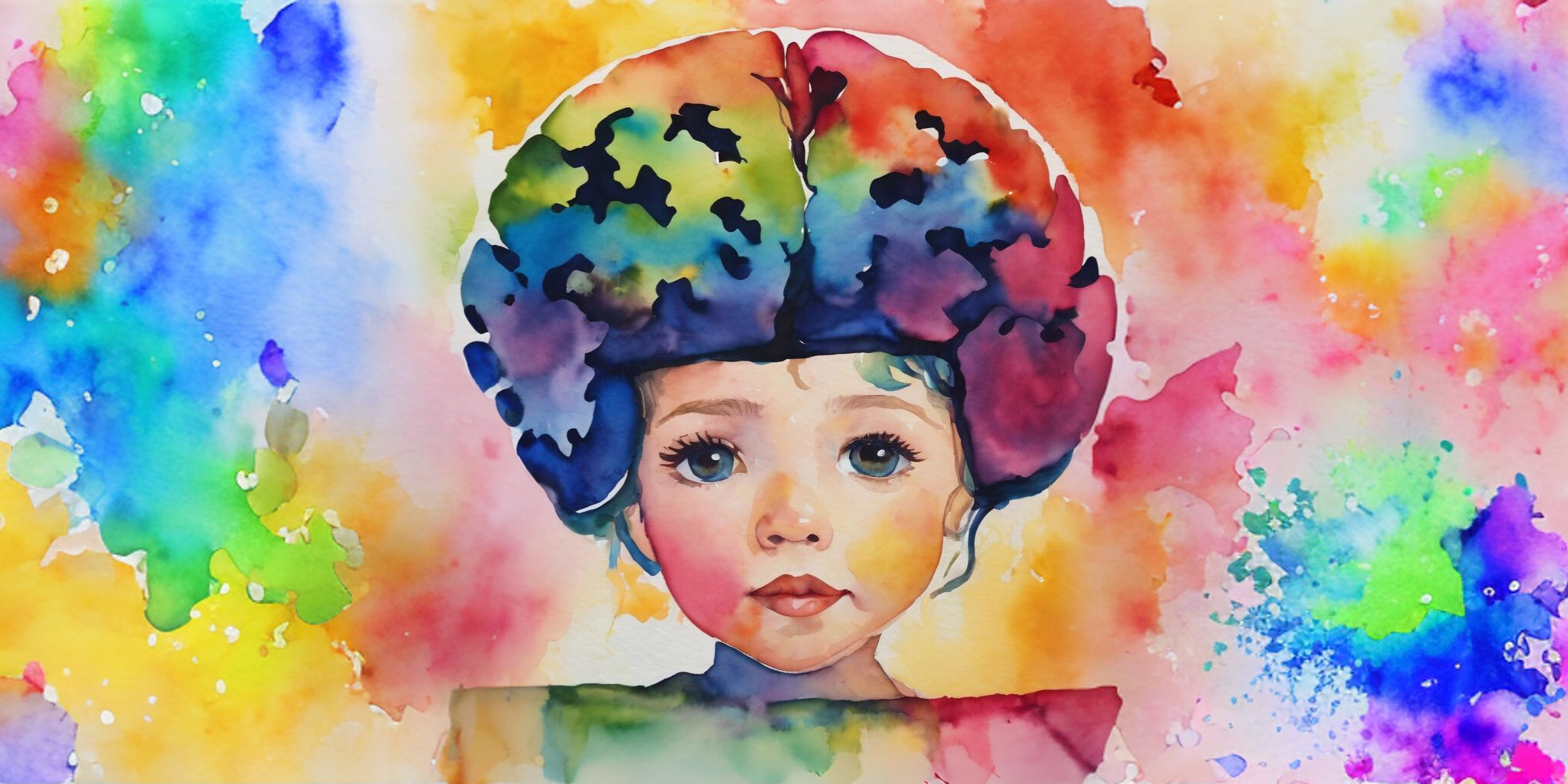
A portrait of the artist as a civic educator?
November 17, 2023
By Kameliya Tomova and Louisa Slavkova
In 1916, James Joyce released “A Portrait of the Artist as a Young Man”, unaware of the profound literary and social impact it would have. Not just in Ireland, his native country, but globally. Joyce’s masterful use of the stream of consciousness allows the reader to intimately connect with the main character’s thoughts and feelings. This connection challenges and questions the prevailing moral and religious norms of the time, contributing to debates on individualism, free thinking and national identity. It remains a pivotal work in the history of modern literature and continues to be studied and discussed for its social and cultural significance.
Art offers a lens to explore the human experience, connecting our personal lives with the broader civic landscape. Works of art make us more empathetic and connected, ultimately arriving at a deeper understanding of our civic duties and values. We immerse ourselves in the lives of main characters, becoming emotional and more conscious of the world around us, and we sometimes witness or experience the fusion of the personal and the political, which inspire us to engage in conversations on human rights, political accountability, and social justice.
However, works of art can often be provocative and whereas they are effective in pushing boundaries, taking risks, and fearlessly addressing topics that others shy away from, they can sometimes be polarising too. When such instances arise, the essential role of an intermediary becomes evident.
The civic educator, often acting as a bridge, making sense of complex interdependencies, is exactly this: the intermediary, the facilitator of the connection between the work of art and the public. You can recognise a civic educator as the curator of an art exhibition, the tour guide in front of the city hall, or the organiser of the local community art festival. We’ve seen them as social and environmental justice activists, youth mentors, historians and digital activists. They are all prone to use art when conversations fail to explain complex issues. Or sometimes even when they simply wish to prompt one’s way of thinking without much explanation. They can use a piece of art to start a conversation, approaching taboos and addressing challenging issues that might otherwise be difficult to discuss, creating a space to engage with sensitive topics without the need for deep personal disclosure. Civic educators can, most importantly, use works of art to challenge common perceptions, fostering critical thinking, broadening perspectives, and nurturing capabilities to engage with diverse viewpoints, thus contributing to the cultivation of informed and open-minded individuals.
Consider historian Rutger Bregman’s work for a practical example. He challenges William Golding’s dark portrayal of human nature in “Lord of the Flies” with his book “Humankind,” presenting a narrative of cooperation and altruism. This effort exemplifies the civic educator’s role in mediating between art, history, and public perception.
In a time where art often provokes and polarises, figures like Bregman play a key educational role. They guide us through complex social and political landscapes, fostering understanding over complexity. Bregman’s endeavours exemplify the importance of a balanced and nuanced approach, countering prevailing narratives without succumbing to polarisation. In that sense, civic educators carry a responsibility to transcend the polemic nature of provocative pieces, steering society toward common ground, and mitigating polarisation.
At NECE, we are on a quest to create the collective profile of the civic educator of the 21st century. We view the ‘portrait’ of the artist as a civic educator as a highly complex one, perhaps requiring the artist to put on, or be willing to put on the hat of the responsible intermediary first and that of the artist second.
Such would be the artist, for instance, who’s activism is underscored by a measured, thought-provoking approach that successfully draws a global audience into essential discourses addressing e.g. human rights, political accountability, social or environmental justice; an approach based on universal values and principles, acting as a unifying bridge, transcending differences to foster a sense of shared purpose.
Finding successful examples of this dual role is challenging. Even artists like Ai Weiwei, despite their best intentions, may sometimes deepen divisions. This underscores the civic educator’s role in fostering unity through art or other means.
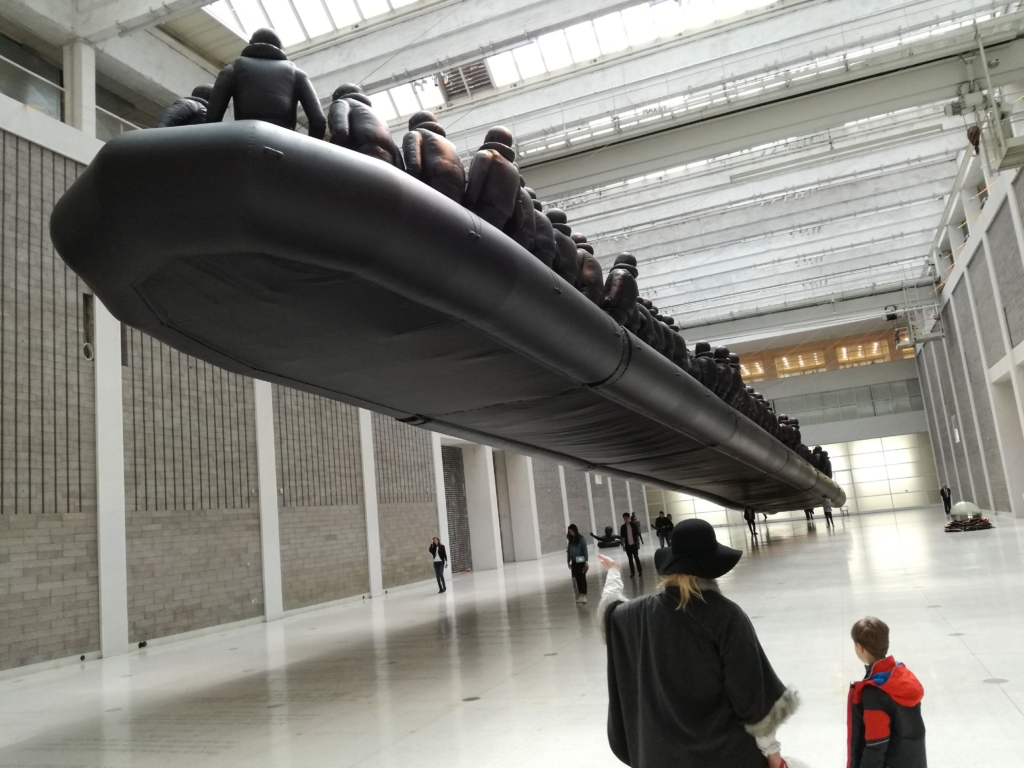
Law of the Journey by Ai Weiwei, Prague National Gallery
Daily, we see narratives become divisive. Civic educators work to ensure art unites and enlightens, rather than divides. Their commitment to a balanced yet factually accurate view remains essential in guiding communities towards understanding, empathy, and the shared values that underpin a thriving society.
Ultimately, civic educators aim to unpack complex concepts like democracy, climate, migration or international law, making them accessible and promoting their underlying principles.
Do you, as a civic educator, find art helpful in fostering critical thinking and nuanced dialogue? How do you navigate diverse perspectives to achieve respectful outcomes?
Share your experiences with us at nece@thecivics.eu and we will share them with the NECE community.
Latest news
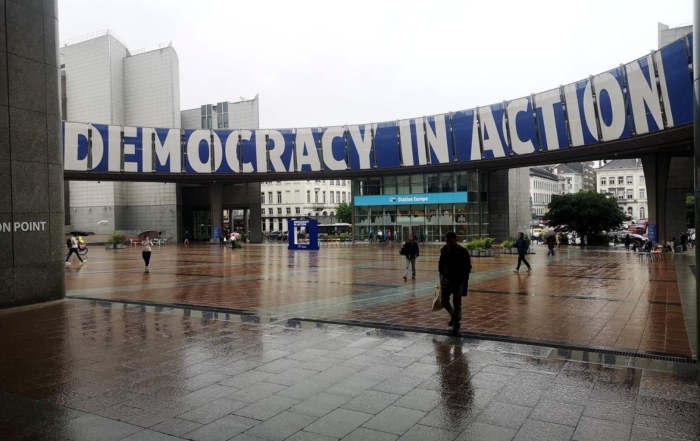
Europe cannot educate for democracy as if the world has stayed the same
Europe cannot educate for democracy as if the world has stayed the same Reflections from a NECE & ...
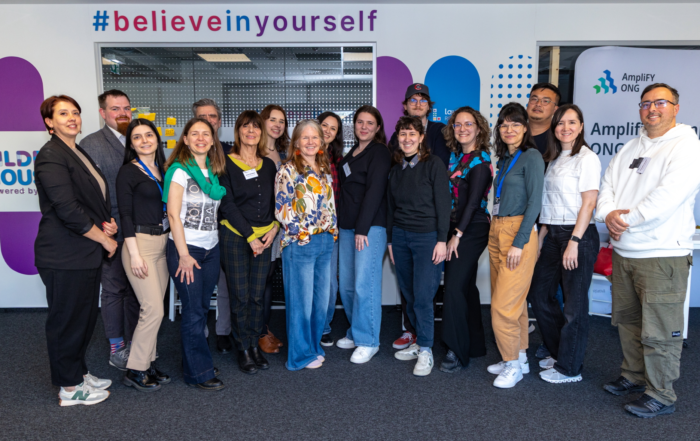
Technology, politics, and practice
Technology, politics, and practice Understanding the civic gap May 4, 2026 By Kameliya Tomova and Mila Moshelova ...
HOPE in challenging times: Insights from the NECE Festival 2025
HOPE in challenging times Insights from the NECE Festival 2025 March 18, 2026 By Ole Jantschek, National Director of ...
Notes from the Istanbul Lab on Trust and Polarisation
Notes from the Istanbul Lab on Trust and Polarisation December 18, 2025 By Kameliya Tomova For years, our work ...