
Technology, politics, and practice
Understanding the civic gap
May 4, 2026
By Kameliya Tomova and Mila Moshelova
“There is what we call a gap when it comes to understanding the dynamics between politics and technology… in civil society we don’t understand enough of it, and if we don’t understand enough of it, how can we talk to the communities that we’re working with?”
Anna Vindics, Rethink.CEE Fellow and speaker in the Bucharest Lab
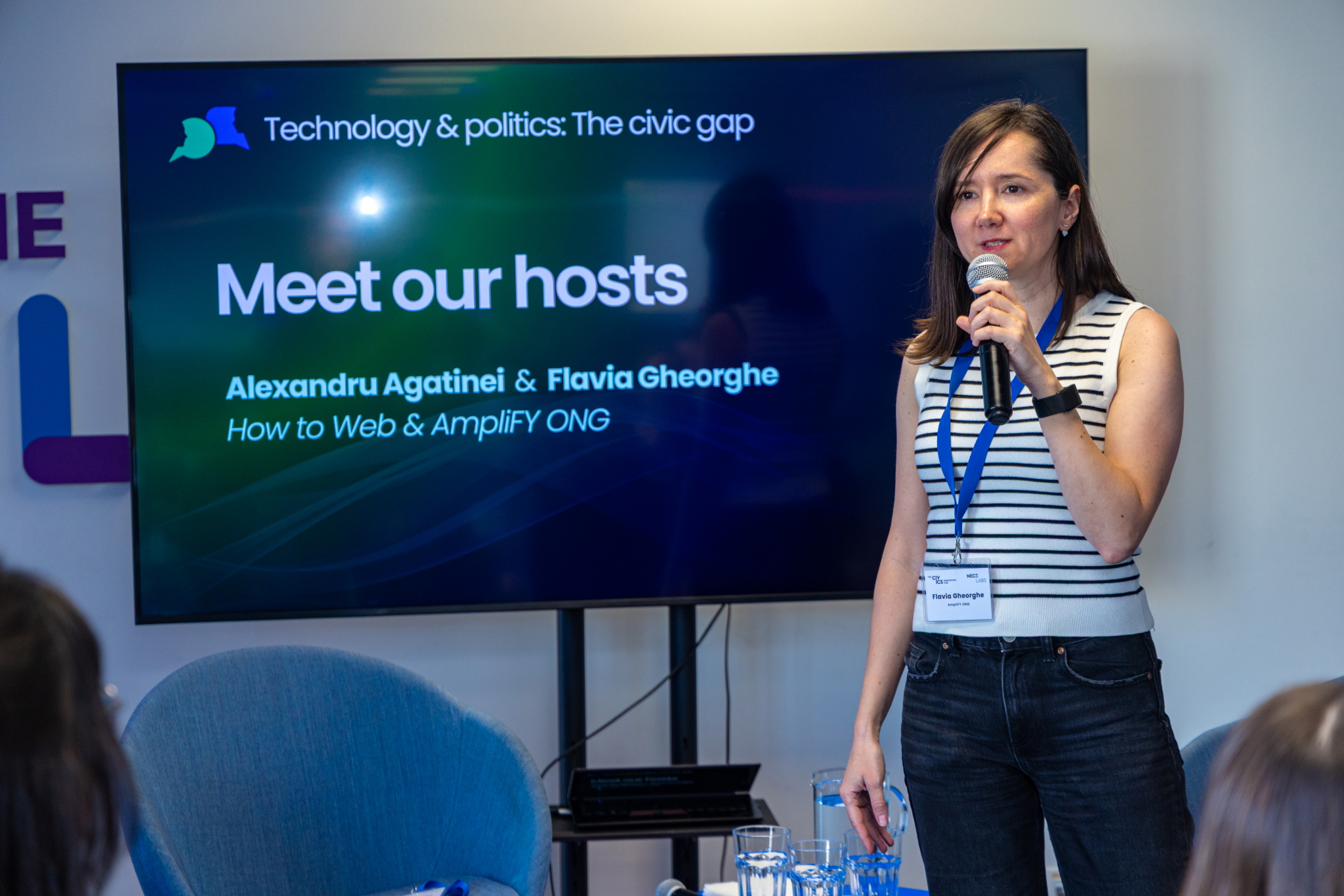
For more than a decade, digital infrastructures and the mechanisms through which platforms determine what spreads and gains attention, and more recently artificial intelligence, have been shaping how information circulates and how people form judgements, with the work of civic educators entering a more demanding phase day by day. Civic education is required to engage with technological systems that influence behaviour, participation, and trust, often without sufficient tools or institutional support. As part of the COMPASS Europe project, our platform has started to address this more systematically. The Bucharest Lab, “Technology and politics: The civic gap,” was far from sufficient to land us where we’d like to be in terms of knowledge on how to respond in practice, but an important step in this direction, providing a space to examine how these conditions affect civic education and what responses are possible.
We convened the Bucharest Lab this April at a point where civic educators and civil society practitioners are working under conditions that are difficult to name and even harder to cope with. Accounts from the field show that information travels faster than it can be verified, coordinated disinformation campaigns blur into everyday content, and institutions struggle to counteract the effects. In these conditions, civic educators are expected to support understanding, participation, and trust, while working with limited tools and incomplete information. The Lab brought these experiences into a shared space to examine them more closely. What became visible over its course was a multi-layered gap that cuts across several dimensions of civic practice. It extends from limited understanding of how digital systems operate technically, through uneven and often delayed institutional responses, to behavioural dynamics shaped by fragmented information environments, and into the constraints of everyday practice.
This gap cannot be explained by a single missing element or deficiency. It reflects a structural condition that shapes how civic education operates today.
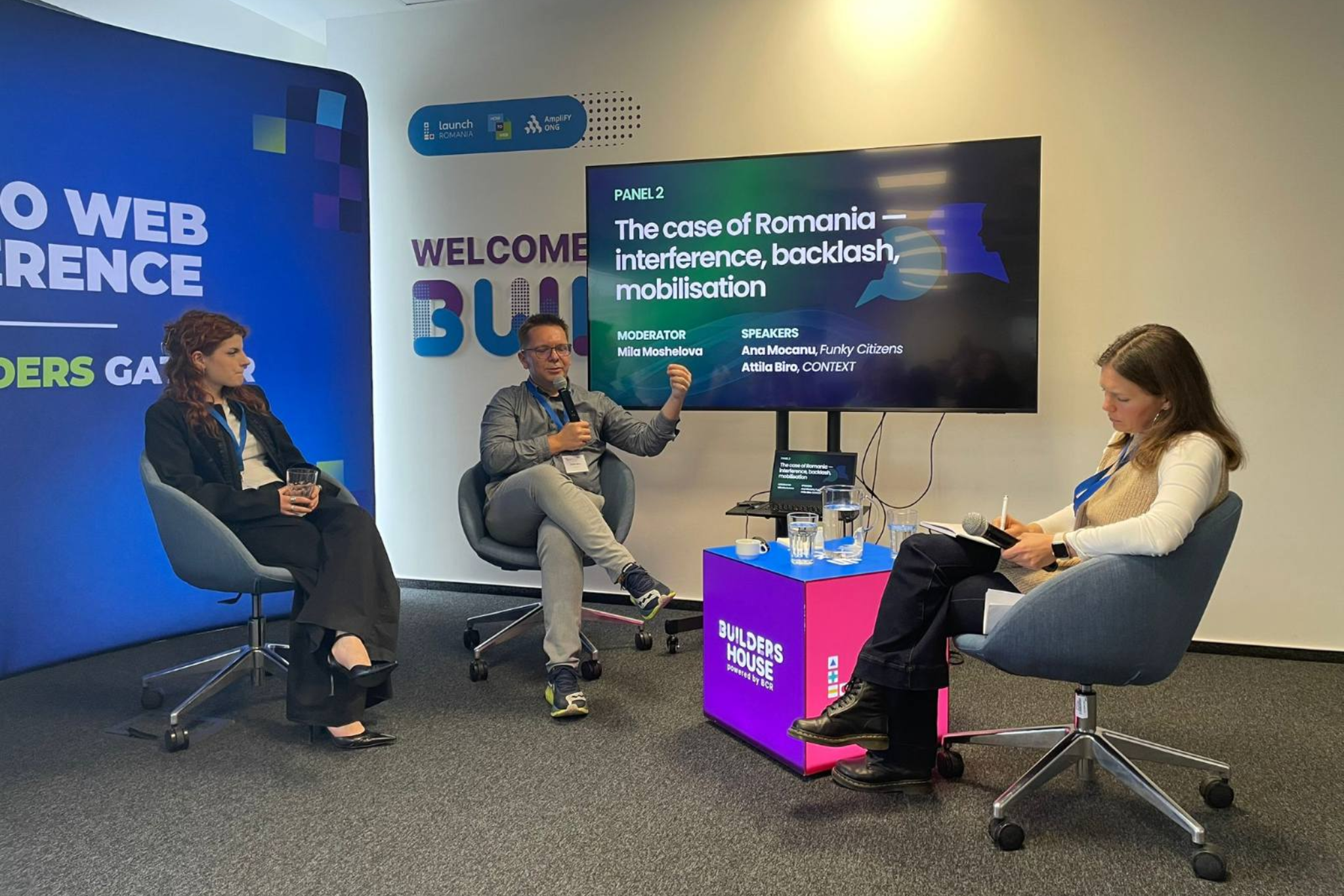
The case of Romania served as the entry point for the Lab, providing a recent and concrete example from the 2025 presidential elections. It showed how coordinated online activity, the rapid spread of content across platforms, and offline mobilisation can reinforce each other and influence how people understand and respond to an election. It also made visible the limits of current responses, with institutions slow to explain what happened and civil society working with limited information and resources to fill that gap.
The first strand of discussion focused on the structure of the information environment. Digital ecosystems now function as spaces in which geopolitical competition, domestic political activity, platform infrastructures, and informal networks intersect. These actors operate within the same environment, often with overlapping interests but different methods, producing cumulative effects that are difficult to isolate or attribute to a single source.
Within this environment, the function of manipulation requires a more precise understanding. The objective is often not to secure agreement with a specific claim, but to create conditions in which individuals struggle to orient themselves. Confusion, disengagement, and fragmentation follow from this. Algorithmic systems reinforce these dynamics by amplifying content that generates engagement, which tends to favour emotional intensity and polarisation. Synthetic media further alters the landscape by making it cheap and easy to create and spread large amounts of realistic-looking text, images, and videos, allowing more content to be produced quickly and reach wide audiences.
“The purpose is no longer to make you believe something but to make you believe nothing… just to create confusion and make it really difficult to distinguish between truth and faulty, authentic content and synthetic manipulated content.”
Oana Popescu-Zamfir, political analyst and speaker in the Bucharest Lab
These developments alter the nature of democratic vulnerability. The central issue is no longer limited to whether citizens can distinguish between accurate and inaccurate information. It concerns whether they can understand where information comes from, how it is amplified, and how it shapes what they see, trust, and act upon. Lab participants described observable effects that reflect this shift, including withdrawal from public debate, increased reliance on closed social environments, the formation of online affinity groups that replace broader forms of community, and declining trust in institutions among individuals who depend on social media as a primary source of information.
A further effect is that, as synthetic and manipulated content becomes more widespread, it affects not only the credibility of false information but also the perceived reliability of authentic sources. The distinction between them becomes less clear, and people find it harder to assess what to trust. This has direct implications for civic education, which depends on a basic level of shared understanding to enable discussion, interpretation, and learning.
At the same time, participants were cautious in assigning explanatory weight to technology alone. A consistent position across the Lab was that digital systems function as infrastructure: they shape the conditions under which information circulates and gains influence, but they do not determine outcomes independently of social, political, and institutional factors.
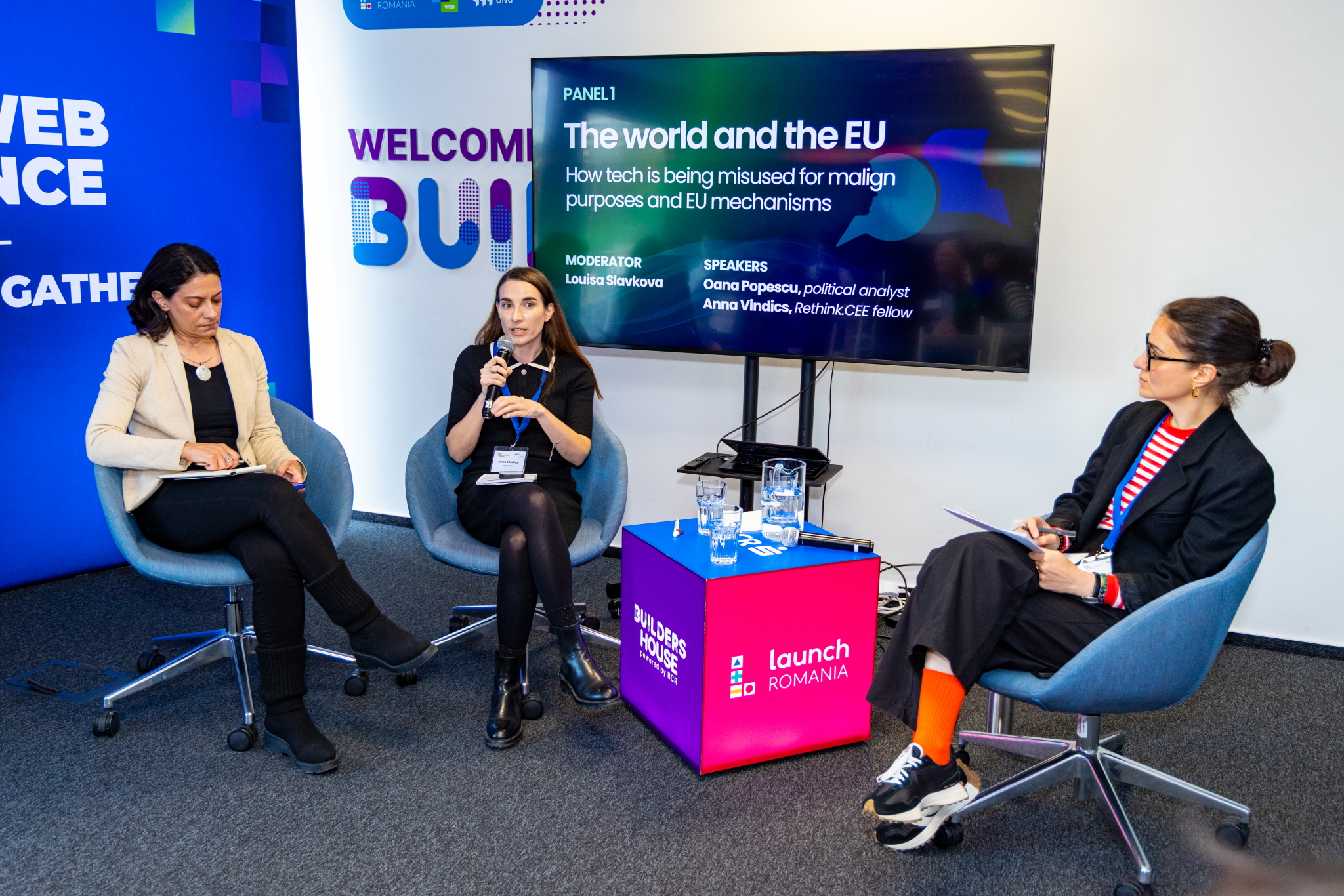

The Romanian case discussed at the Lab illustrated this distinction through concrete evidence of coordinated inauthentic behaviour at scale, including the reuse of the same accounts and networks to circulate political messaging across different topics and moments, often simultaneously across multiple platforms. There were also indications that some of these activities extended beyond national borders, with similar patterns having been observed in Hungary and Moldova.
The case also showed that offline dynamics remain central. Long-term grassroots engagement preceded online visibility, and influence was mediated through trusted local intermediaries, including teachers, clergy, and community figures. Political organisation and narrative coherence were embedded in existing social structures. Digital activity extended and intensified these processes, but did not replace them.
“There would be no online success if we had not had the offline communication… it is really offline where things happen.”
Oana Popescu-Zamfir, political analyst and speaker in the Bucharest Lab
Focusing only on platforms — for example, on removing posts, flagging content, or changing how feeds are ranked — can draw attention away from how political actors organise campaigns, how institutions respond or fail to respond, and how influence is built through existing networks of trust. It can also lead to responses that rely on these technical fixes, while the same actors continue to reuse accounts, shift messages, and mobilise people through other channels.
With respect to platform governance, European regulatory frameworks, particularly the Digital Services Act, provide an emerging structure for addressing systemic risks and increasing transparency. These frameworks set important standards, including obligations for platforms to assess risks and disclose how their systems operate. Their effects, however, remain partial.
Lab participants identified several constraints in practice. Enforcement differs across member states, with smaller countries facing clear limitations in engaging directly with large platforms or triggering timely action. Regulatory processes move more slowly than the dynamics they seek to address, which makes it difficult to respond during fast-moving events such as election periods. The ability to influence platform behaviour in real time is therefore limited. In addition, much of the focus remains on how platforms function, while less attention is given to how political actors use these systems deliberately and repeatedly to shape visibility and public perception.
Empirical observations from Romania reinforced these points. Platform responsiveness increased when issues reached a level of visibility that attracted attention at European level and carried reputational consequences for the companies involved. At national level, requests for action were slower and often received limited engagement. Insights presented during the Lab by investigative journalist Attila Biro showed that coordinated campaigns can be organised relatively easily, within a low-cost high-impact framework. Using inexpensive tools, it is possible to set up and manage multiple accounts that automatically generate and post content, repeat the same messages, and amplify them through likes, shares, and comments. As an example, a single account can post 50 times per minute or 2 500 times within 50 minutes, creating the impression of widespread support.
These activities are further reinforced by monetisation systems that reward visibility and engagement. Content that generates more clicks, reactions, or watch time is pushed to more users, which creates a financial incentive to produce material that spreads quickly, regardless of its accuracy. In practice, this means that coordinated networks can increase the reach of their messages not only through volume, but also by aligning with how platforms prioritise and reward content.
This results in a structural dependency. Civic actors rely on these platforms to reach audiences, organise events, and communicate their work, while operating within systems whose rules, visibility criteria, and moderation practices they do not influence and cannot match in scale.
The institutional dimension of the gap was particularly evident in the Romanian context. As one of the Lab’s speakers, Anna Mocanu from Funky Citizens, put it, “civil society had the place of the state, so we were the ones explaining to people what happened.” Civil society organisations tracked developments, compiled available evidence, explained unfolding events to their audiences, and attempted to maintain a shared understanding of what was happening. These efforts were often partial and constrained by limited access to verified information.
“The fact that we don’t have a final response on what happened with the elections is a wound that is still open,” observed Mocanu. At the time of the Lab in April 2026, no comprehensive official account of the 2025 presidential elections and the associated interference had been communicated by the relevant public authorities. As a result, there is no public consensus and understanding remains fragmented, with different groups relying on different sources and interpretations. In practice, this means that people are often working with incomplete or conflicting accounts of the same events. This absence of a societal consensus weakens confidence in how decisions are made and whether they can be trusted.
Lab participants described how these conditions shape their daily work. Many operate in small teams with limited time, responding to developments as they unfold, often without access to up-to-date or policy-relevant information. Planning is difficult, and much of the work becomes reactive. Within these constraints, the Lab pointed to a set of practices already being tested in the field and adapted to current conditions.
One example is fact-checking simulations used in schools and universities, where participants take on roles within a newsroom — editor, reviewer, or reporter — and work through real or realistic content, deciding what to verify, what to publish, and how to assess sources under time pressure. Another approach involves going directly into everyday environments rather than relying on formal settings: civic interventions have taken place at public events, local gatherings, or after activities such as sports events, where people are already present and more open to short conversations.
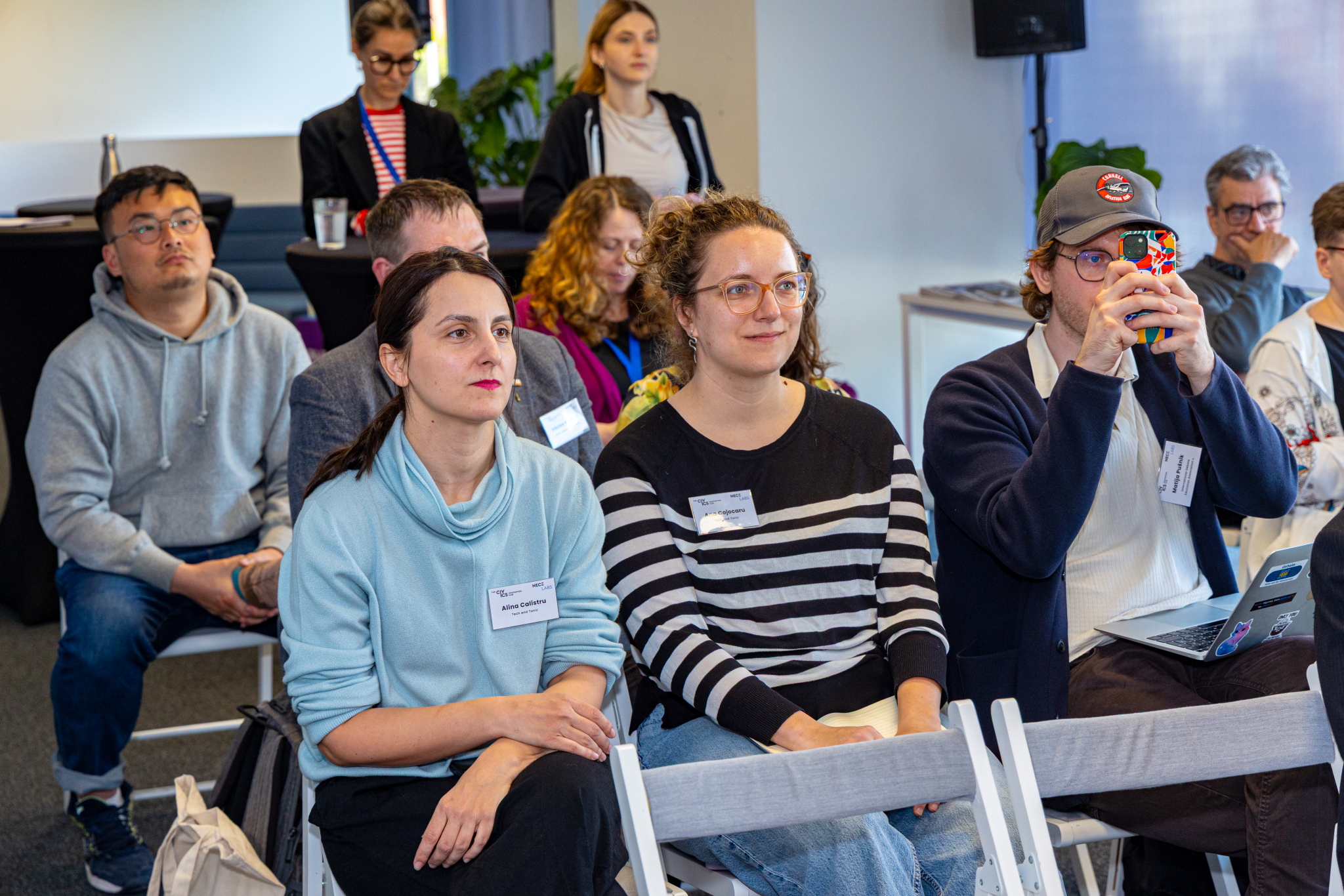

Lab participants also shared how historical examples are used to make current developments easier to grasp. As Anna Mocanu explained, “the subject of the elections was too sensitive for people to engage with what happened, so we used an example from Romania’s history — when the communists came to power — to show how electoral fraud and propaganda relied on similar methods to those used today. This worked because people already had a reference point: they could relate to that period and better understand how manipulation and propaganda function.”
The underlying logic of such interventions is that civic education should adapt to where people are, how they access information, and how they already interact, rather than expecting them to enter predefined formats.
Media literacy and civic education remain more than necessary, but their impact depends on the context in which people encounter information. In practice, decisions are often shaped by trust in familiar individuals, alignment with existing views, and a sense of belonging to a group. Knowing that information may be manipulated does not prevent it from influencing behaviour. Lab participants also pointed to factors such as stress, fatigue, and social isolation, which can make simplified explanations and closed communities more appealing.
All of the above points to the need to connect civic education with other forms of support. This includes approaches that strengthen social ties, create opportunities for direct interaction, and help people process complex or conflicting information. On its own, the transfer of knowledge is not sufficient.
Communication was identified as a recurring operational limitation that affects how institutions and organisations work across all stages of their activity. It shapes how issues are explained, how responses are perceived, and whether engagement reaches beyond already supportive audiences. In many cases, institutions and organisations communicate after events have unfolded, providing explanations or statements once false narratives are already well-established. This leaves space for other actors to define how events are interpreted. In practice, communication often remains within existing networks — subscribers, partners, or already engaged audiences — while reaching broader groups proves more difficult.
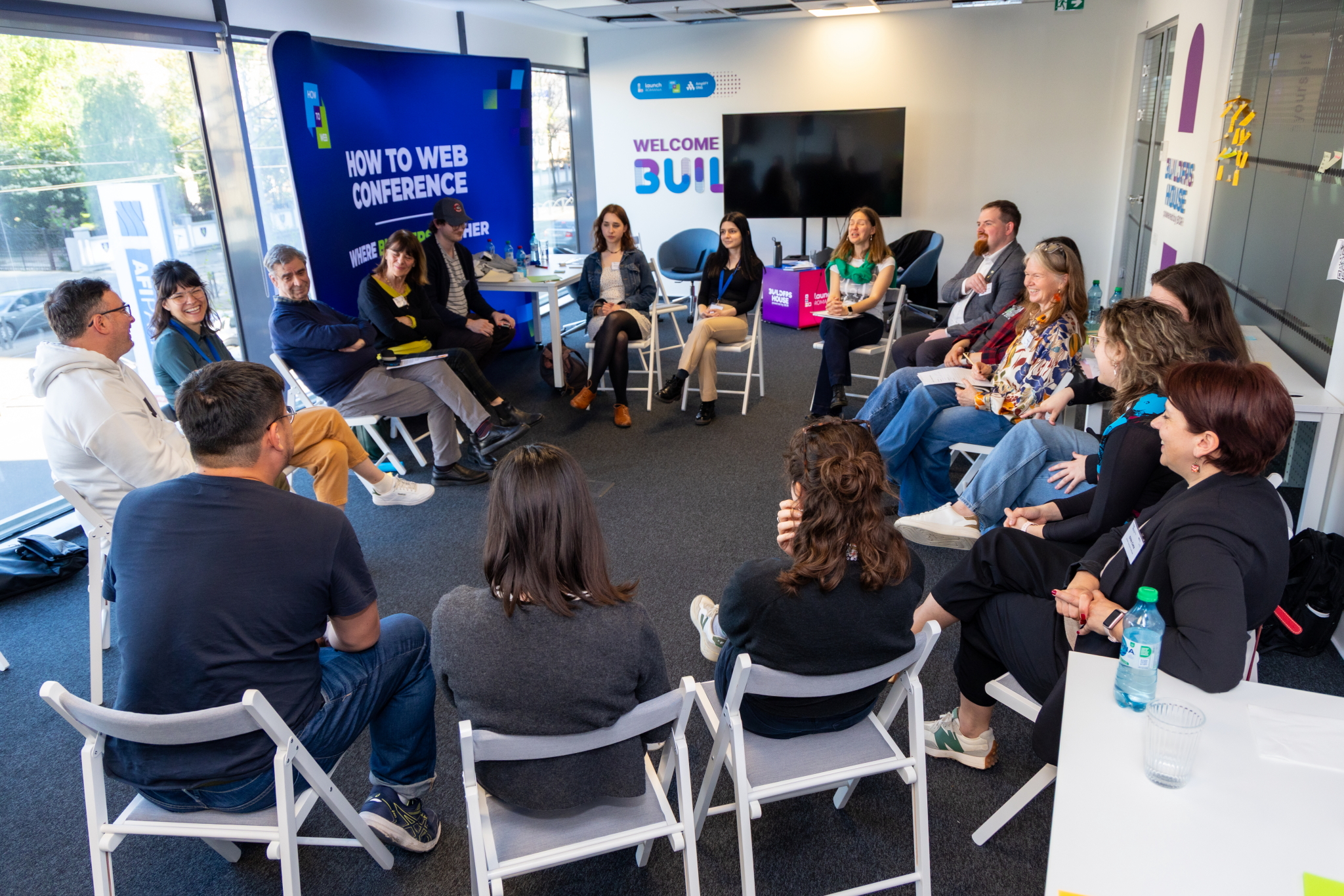
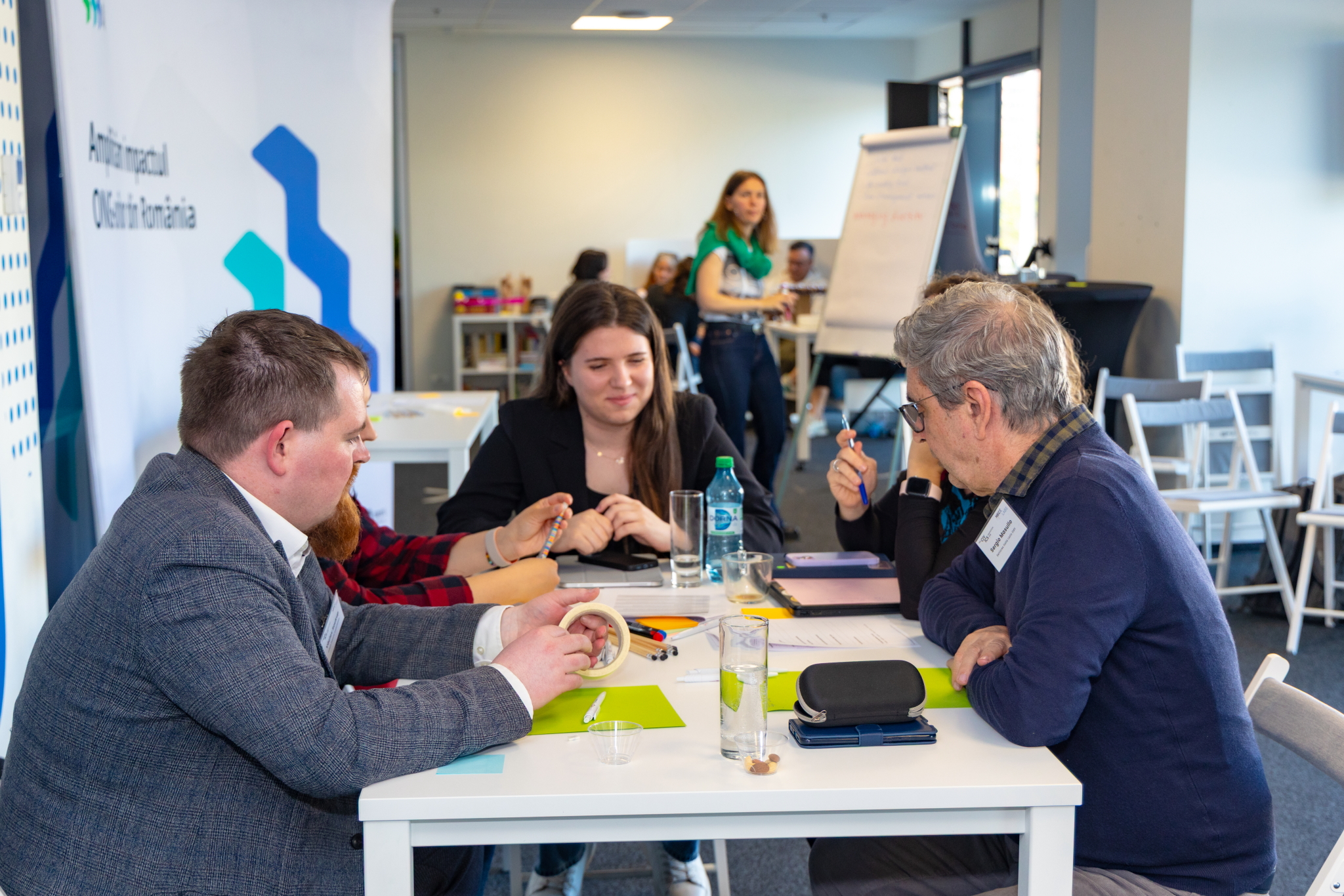
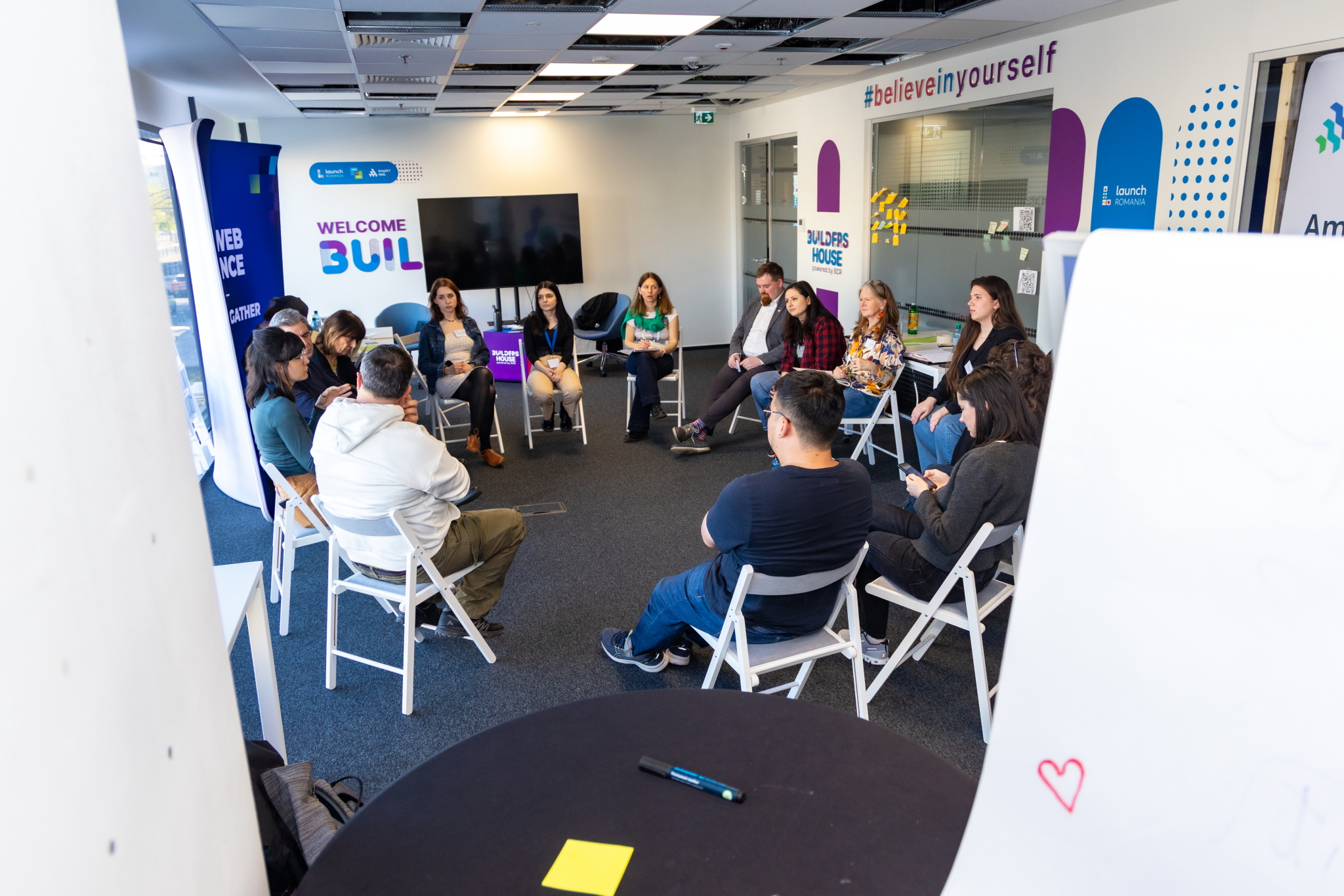
In sum, the Lab did not aim to produce a single model for responding to the intersection of technology and politics in civic practice. Its purpose rather was to clarify how work can be carried out under current conditions. Participants focused on making technical dynamics more understandable in practice, using examples drawn from their work. This included testing ways to engage people with complex information, working in everyday settings, and designing formats that allow people to stay in conversation even when they disagree. Dialogue as a tool for making sense of complexity, was a central element of the lab, and was treated as a structured, methodological way of working that allows participants to process information, reflect, and respond over time.
There was also an emphasis on practical experimentation. Participants focused on small-scale pilots with clearly defined audiences and limited scope, designed to be implemented within three to six months. For example, this could involve testing a dialogue format with a specific group, running a short series of sessions in a local context, or adapting an existing tool to a new setting. Risks and constraints were discussed openly as part of the design process.
Several structural issues that shape how civic actors operate remained unresolved:
- The enforcement of platform regulation continues to vary across countries.
- Coordination between national and European responses remains uneven.
- Civic actors often rely on short-term funding, which limits continuity.
- Combining online and offline approaches in a coherent way remains difficult in practice.
- Trust in institutions is influenced by broader political developments that cannot be addressed through individual projects alone.
These conditions are unlikely to stabilise in the near term. The Lab did not attempt to resolve them, but it provided a clearer picture of how they interact.
Thus, the “civic gap” can be understood as a combination of interrelated factors: limited understanding of how digital systems function in practice, uneven institutional responses, fragmented social environments, and constrained civic capacity. Addressing this gap requires coordination across these areas, which, of course, cannot be achieved through a single intervention.
For civic educators and practitioners, the immediate task is to make deliberate choices about where to act and with whom. This includes identifying specific groups, working within the environments where they already receive information, and deciding what can realistically be addressed within limited time and capacity. It also involves setting clear objectives for each intervention — what participants should understand, question, or be able to do differently — and assessing whether this changes how they engage with information or public issues.
For the broader civic education field, the work ahead requires greater clarity about where this work begins and where it reaches its limits. This means being explicit about what civic education is expected to address in practice, and what depends on political decision-making, institutional capacity, or regulatory enforcement. Civic education can support people in understanding how information is produced and circulated, help them question and interpret what they encounter, and create structured settings where different views can be expressed and examined. It cannot provide authoritative accounts of events, resolve disputes over facts at scale, or substitute for institutional action. The task is to work with this distinction in mind while staying attentive to the wider conditions that shape how this work is received and what it can achieve.
* NECE is financially supported by the German Federal Agency for Civic Education | bpb and led by THE CIVICS Innovation Hub.
** This event is co-funded by the European Union. Views and opinions expressed are however those of the author(s) only and do not necessarily reflect those of the European Union or the European Education and Culture Executive Agency. Neither the European Union nor the granting authority can be held responsible for them.
Latest news
Europe cannot educate for democracy as if the world has stayed the same
Europe cannot educate for democracy as if the world has stayed the same Reflections from a NECE & ...
Technology, politics, and practice
Technology, politics, and practice Understanding the civic gap May 4, 2026 By Kameliya Tomova and Mila Moshelova ...
HOPE in challenging times: Insights from the NECE Festival 2025
HOPE in challenging times Insights from the NECE Festival 2025 March 18, 2026 By Ole Jantschek, National Director of ...
Notes from the Istanbul Lab on Trust and Polarisation
Notes from the Istanbul Lab on Trust and Polarisation December 18, 2025 By Kameliya Tomova For years, our work ...